Property intelligence
Commercial Window Cleaning: Drones vs. Lifts, Scaffolding, and Rope Access
A clear comparison of the most common access methods for commercial window cleaning—and where each one makes sense.
Access method shapes the entire project
For commercial window cleaning, the water and cleaning solution are only part of the job. The access method affects scheduling, pedestrian control, parking, setup, insurance, and the amount of time occupants see equipment outside their windows. The right choice depends on the building rather than a one-size-fits-all preference.
Drones, boom lifts, scaffolding, and rope access can all be appropriate. A responsible contractor should explain why a method fits the facade, not force every property into the same process.
Drone commercial window cleaning
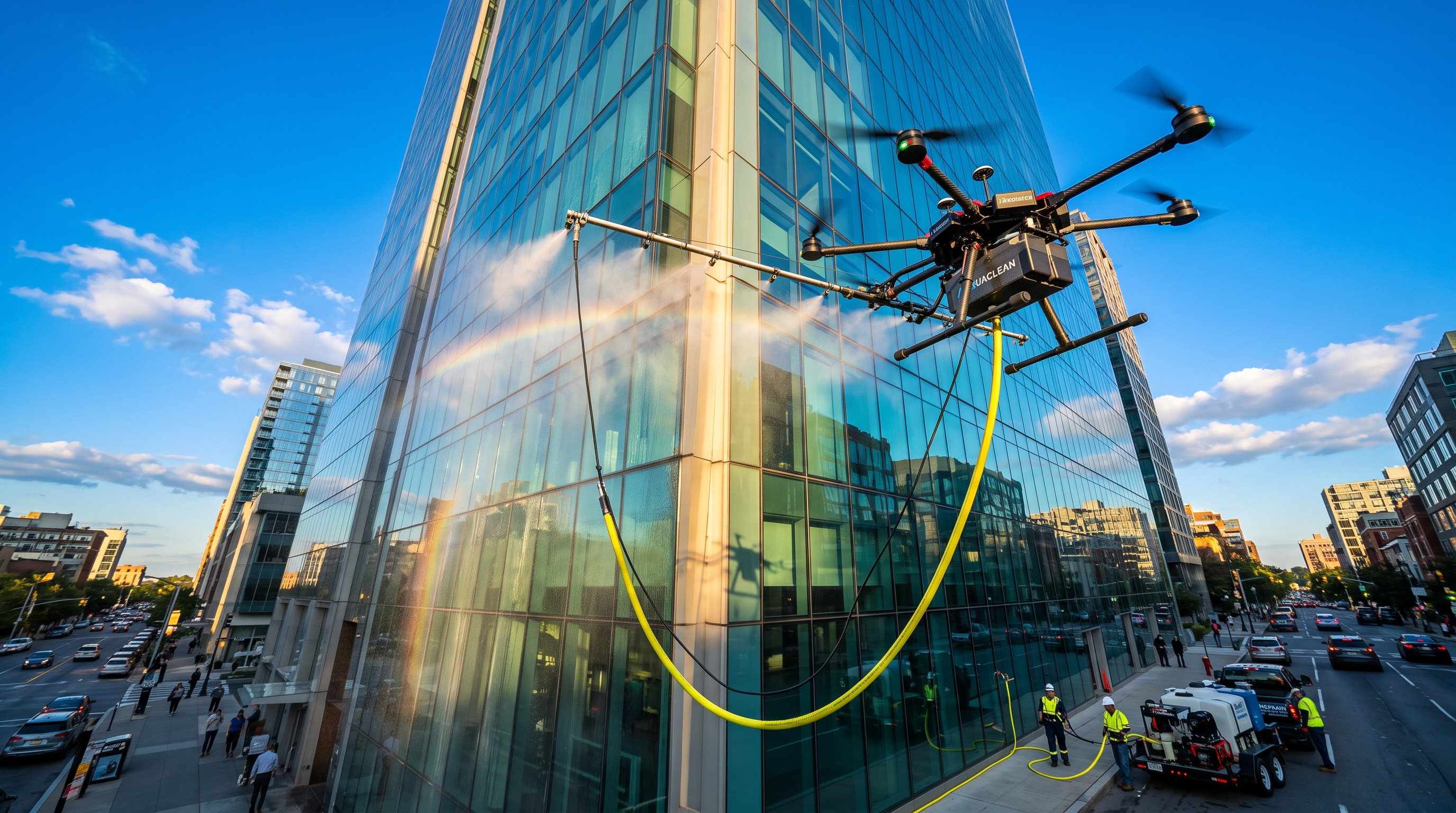
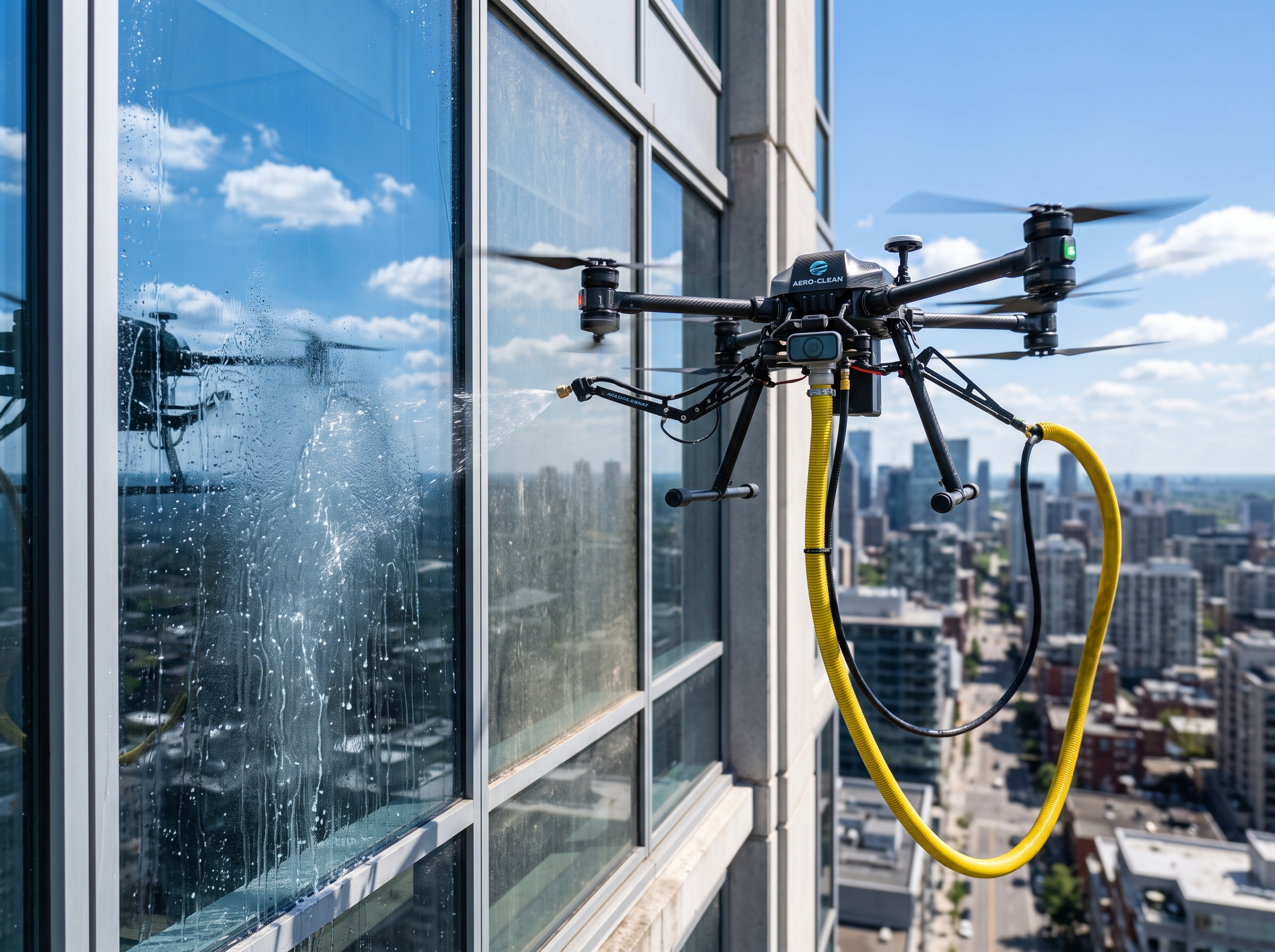
A tethered cleaning drone applies purified water or an appropriate wash solution while the pilot and technician stay at ground level. It can move across broad elevations and reach areas where lift placement is difficult. Because there is less heavy access equipment to stage, drone work can reduce interference around entrances, courtyards, and occupied spaces.
Drone cleaning performs best on compatible exterior glass and frames where a controlled rinse can deliver the required finish. A site test helps confirm water quality, spotting risk, seals, facade condition, and the level of detailing expected.
- Strong fit for broad, repetitive elevations
- No worker suspended beside the facade
- Smaller ground footprint than many traditional systems
- Requires suitable weather, airspace, and a controlled operating area
Boom lifts and scaffolding
Lifts provide a stable platform and close physical access, which can be useful for hand detailing, restoration, inspections, or surfaces that require direct agitation. Their limitations are reach, setup space, ground loading, and the need to move equipment around the building. Parking restrictions and blocked paths may also need to be coordinated.
Scaffolding offers sustained access for long-duration construction or restoration, but installation and removal add time and complexity. For routine cleaning alone, that infrastructure may be more than the project needs.
Rope access
Rope-access technicians can reach complex elevations without a lift and can perform detailed hands-on work. The method still places people at height and requires certified technicians, anchor planning, rescue procedures, and careful coordination. It remains valuable for conditions that cannot be solved with a remote wash system.
How to compare proposals fairly
Property teams should compare the complete scope rather than the headline price. Confirm which elevations, panes, frames, ledges, screens, and stain types are included. Ask how access, water, runoff, weather delays, and touch-ups will be handled.
- Scope and exclusions stated in writing
- Expected finish and any test area
- Site-control plan and tenant impact
- Insurance, operator credentials, and equipment plan
- Photo documentation and re-clean process
The practical answer
Drones are compelling when a property needs efficient routine exterior glass cleaning with minimal work at height and a compact ground operation. Traditional access remains useful when technicians need prolonged hands-on contact with the facade. Many portfolios benefit from using each method selectively rather than treating the decision as all-or-nothing.